 Alternative News
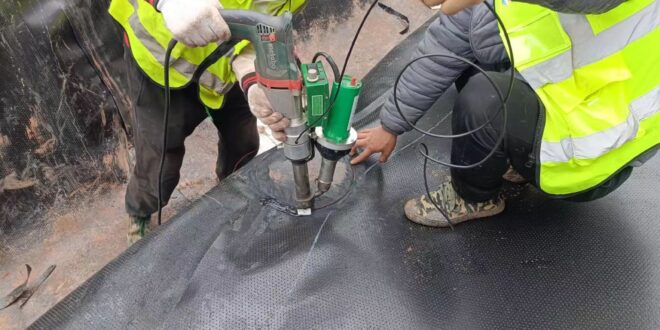
Geomembranes are the last line of defense in landfills, ponds, heap leach pads, and other containment systems. If they are installed poorly, even top grade material can fail early, so verification is essential.
A good verification program blends inspection, testing, and documentation to prove the liner system meets design intent before it is buried or commissioned.
Planning verification before installation starts
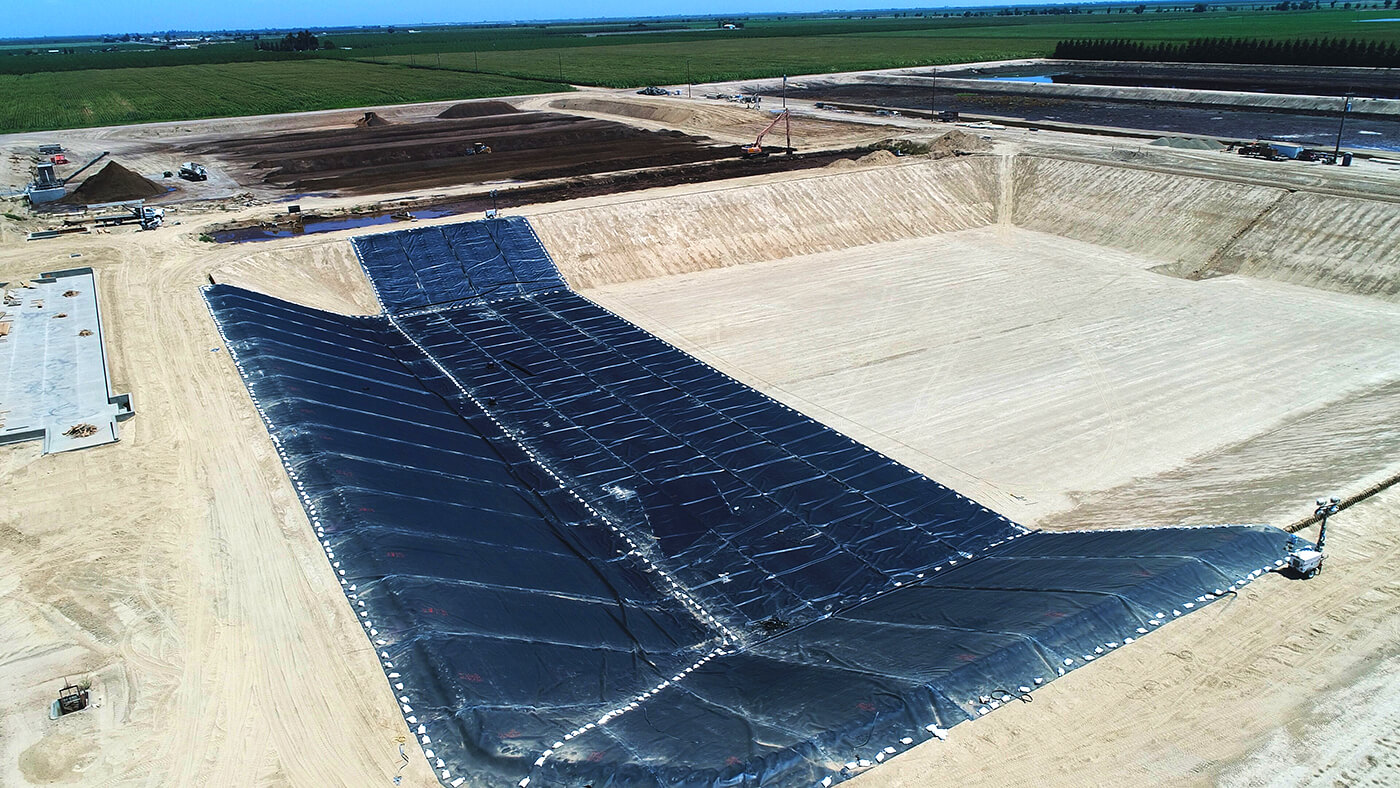
Verification begins in the planning phase, not after panels are welded. The owner, installer, and CQA team should agree on acceptance criteria, testing frequency, and reporting formats in a pre construction meeting.
This plan typically references project drawings, material specifications, seam test requirements, and repair procedures. It also defines hold points where work must stop until inspection is cleared, which prevents defects from being covered.
Subgrade verification is the first critical step because the liner can only perform on a stable base. The surface should be smooth, free of sharp stones, and compacted to the required density, and any soft spots must be excavated and replaced.
Moisture content and compaction compliance are often confirmed through field testing, and click here for ARC soil testing is a relevant check when a project needs defensible evidence of subgrade quality. Before any liner is deployed, the CQA lead should sign off on the prepared surface and drainage details.
Inspecting panels, seams, and repairs in real time

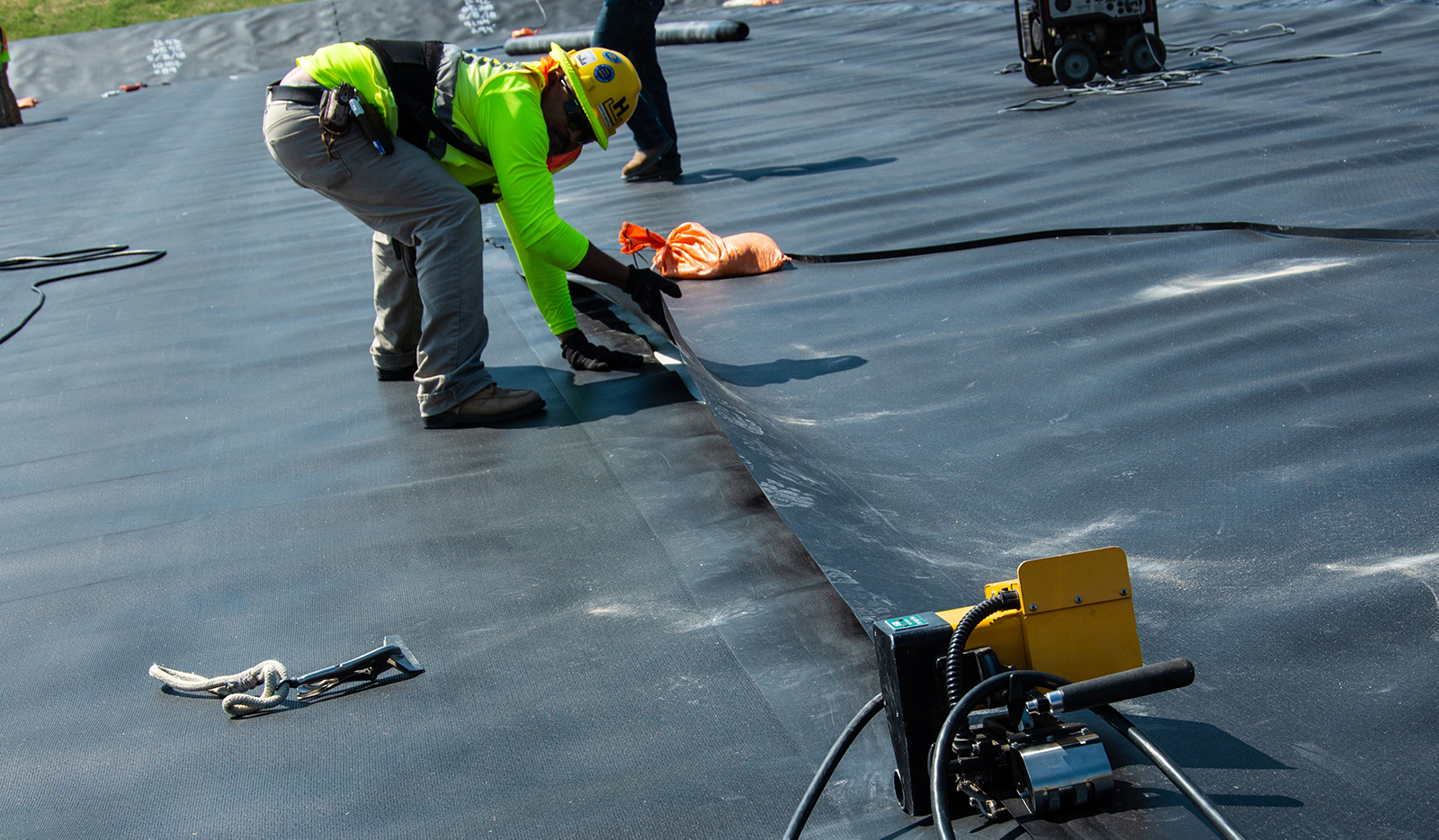
During deployment, inspectors verify that panels match the approved roll map, that factory edges are clean, and that wrinkles and bridging are minimized. Excessive wrinkles create stress points and can trap gas or liquid later, so crews should re pull or re anchor panels as they go.
Seaming verification happens in two layers. First, technicians monitor welding parameters such as temperature, speed, and pressure, and log them for each seam run.
Second, nondestructive seam tests are performed as soon as the weld cools. Air channel tests and vacuum box tests are common because they reveal pinholes and discontinuities without damaging the seam.
Destructive seam sampling then confirms weld strength and peel performance. Samples are cut at the specified interval, labeled, and tested onsite or in a lab, and any failing result triggers an investigation zone and additional testing.
Repairs require the same attention as primary seams. Each patch or extrusion repair should be clearly marked, photographed, and re tested with a nondestructive method, and the repair log must note the reason for repair to help track patterns.
Maintaining documentation and final acceptance confidence
Verification is only as strong as its records. Daily reports should include weather conditions, deployment areas, personnel, equipment IDs, and a summary of inspections, tests, and repairs.
Roll maps and seam logs must be updated in real time so every panel and seam can be traced later. This traceability is crucial for warranty claims, future expansions, or if an investigation is ever required.
Quality teams should also control access and traffic on exposed liners. Walking routes, vehicle paths, and material staging need to be defined, because uncontrolled movement is a common cause of post installation damage.
Before cover is placed, a final walkdown confirms that all seams have passed, all repairs are accepted, and no new damage has occurred since the last test. Some projects add electrical leak detection as a last sweep, especially in high consequence applications.
Conclusion
Geomembrane installation verification works best when it starts with subgrade approval, continues with disciplined seam testing, and ends with complete documentation. By treating inspection and testing as continuous processes, teams reduce leaks, rework, and long term risk.